If you are searching for Data Scientist Jobs in the USA, you are looking at one of the fastest-growing careers in the technology and analytics sector. Data scientists use statistics, programming, machine learning, and analytical methods to turn large amounts of data into useful information that organizations can use for better decisions.
The career is particularly attractive for people who enjoy technology, mathematics, problem-solving, artificial intelligence (AI), statistics, and working with data.
According to the U.S. Bureau of Labor Statistics (BLS), data scientists had a median annual wage of $112,590 in May 2024. Employment is projected to grow 33.5% from 2024 to 2034, with approximately 82,500 additional jobs projected during that period. BLS also projects about 23,400 openings per year, on average, over the decade.
This guide explains data scientist jobs in the USA, salary, education requirements, skills, job duties, entry-level opportunities, remote work, career growth, and how to start a data science career.
What Is a Data Scientist?
A data scientist analyzes data to discover patterns, answer business questions, build predictive models, and help organizations make informed decisions.
Data scientists may work with information such as:
- Customer behavior
- Sales data
- Financial information
- Website activity
- Healthcare data
- Manufacturing data
- Marketing performance
- Product usage
- Business operations
The goal is not simply to collect data. A data scientist turns raw information into actionable insights.
BLS describes data scientists as professionals who use analytical tools and techniques to extract meaningful insights from data.
What Does a Data Scientist Do?
The exact responsibilities depend on the employer and industry.
Common data scientist duties include:
- Collecting and analyzing data
- Cleaning datasets
- Identifying patterns and trends
- Creating statistical models
- Developing machine-learning models
- Testing analytical approaches
- Creating data visualizations
- Communicating findings
- Working with databases
- Collaborating with software and business teams
- Presenting recommendations to decision-makers
A data scientist may spend part of the day writing code, another part analyzing results, and another part explaining findings to colleagues.
Data Scientist Salary in the USA
According to BLS, the median annual wage for data scientists was $112,590 in May 2024.
That is approximately $54.13 per hour when the annual figure is converted using 2,080 working hours.
| Data Scientist Pay | 2024 |
|---|---|
| Median annual salary | $112,590 |
| Approximate hourly equivalent | $54.13 |
| Projected employment growth, 2024–34 | 33.5% |
| Projected additional jobs | 82,500 |
| Average projected annual openings | 23,400 |
These are national figures. A particular job can pay substantially more or less depending on location, experience, industry, education, specialization, and employer.
Why Are Data Scientist Jobs Growing?
The amount of data generated by businesses and consumers continues to increase. At the same time, organizations are using artificial intelligence, machine learning, and analytics to improve operations and decision-making.
BLS’s latest employment analysis says increasing adoption of AI and other information technologies is expected to support demand for workers with expertise in computer science, programming, software development, and data analysis.
BLS projects data scientist employment to increase from approximately 245,900 jobs in 2024 to 328,300 in 2034—an increase of about 82,500 jobs.
This makes data science one of the fastest-growing professional careers in the United States.
Is Data Science a Good Career in 2026?
For people who enjoy technology, statistics, programming, and analytical problem-solving, data science can be an attractive career.
There are several reasons:
High Median Pay
The 2024 median wage was $112,590.
Strong Job Growth
Employment is projected to grow by approximately 33.5% between 2024 and 2034.
AI and Machine Learning
Organizations increasingly use AI and data-driven systems, creating demand for professionals who can work with data.
Multiple Industries
Data scientists can work in technology, finance, healthcare, retail, manufacturing, transportation, marketing, and other industries.
Transferable Technical Skills
Programming, statistics, SQL, machine learning, and data visualization skills can be useful across many industries.
How to Become a Data Scientist
For most people, becoming a data scientist requires a combination of education, technical skills, practical projects, and experience.
BLS lists a bachelor’s degree as the typical entry-level education for data scientists. Common fields include mathematics, statistics, computer science, and related subjects. Some employers require or prefer a master’s or doctoral degree.
A typical path could look like:
Bachelor’s Degree → Programming & Statistics → Data Projects → Internship/Entry-Level Role → Data Scientist
However, individual employers have different requirements.
What Degree Is Best for Data Science?
Several educational backgrounds can lead toward data science.
Popular options include:
- Computer Science
- Data Science
- Statistics
- Mathematics
- Economics
- Engineering
- Information Technology
The best choice depends on the type of data science you want to pursue.
For example, someone interested in machine learning may focus heavily on programming and mathematics, while someone interested in business analytics may emphasize statistics, databases, and business knowledge.
Can You Become a Data Scientist Without a Degree?
It is possible to learn many data science skills independently, but the traditional entry requirement is a bachelor’s degree.
People without a relevant degree may strengthen their applications through:
- Data science courses
- Programming projects
- Statistics training
- Machine-learning projects
- Industry experience
- A strong portfolio
- Relevant certifications
However, completing online courses does not guarantee employment.
For applicants without a traditional background, demonstrating practical ability through a portfolio can be particularly useful.
Important Data Scientist Skills
1. Python
Python is widely used for data analysis, automation, statistics, and machine learning.
2. SQL
SQL is important for working with structured data stored in relational databases.
3. Statistics
Understanding probability and statistics helps data scientists evaluate patterns and build reliable analyses.
4. Machine Learning
Machine-learning knowledge can help professionals create models that identify patterns and make predictions.
5. Data Visualization
Data scientists need to communicate complicated findings clearly.
Common visualization tools and technologies include:
- Matplotlib
- Seaborn
- Tableau
- Power BI
- Plotly
6. Critical Thinking
Data does not automatically provide the correct answer. Professionals need to evaluate assumptions, identify problems, and interpret results carefully.
7. Communication
A technically excellent analysis has limited value if decision-makers cannot understand what it means.
BLS identifies mathematics, computers and information technology, and writing and reading among the top skills associated with data scientists.
Data Scientist Tools and Technologies
Depending on the employer, a data scientist may use:
Programming
- Python
- R
- SQL
- Java
- Scala
Data Analysis
- Pandas
- NumPy
- Jupyter
- Excel
Machine Learning
- Scikit-learn
- TensorFlow
- PyTorch
Visualization
- Tableau
- Power BI
- Matplotlib
- Plotly
Cloud Platforms
- AWS
- Microsoft Azure
- Google Cloud
You do not need to master every technology. It is generally better to develop strong fundamentals and then specialize.
Data Scientist vs Data Analyst
These roles overlap, but their responsibilities can differ.
| Feature | Data Scientist | Data Analyst |
|---|---|---|
| Main focus | Advanced analysis and predictive modeling | Business reporting and analysis |
| Programming | Often extensive | Varies |
| Machine learning | Common | Sometimes |
| Statistics | Advanced | Moderate to advanced |
| Data visualization | Common | Very common |
| Typical entry education | Bachelor’s degree | Varies by employer |
| Career complexity | Often more technical | Often more business-focused |
A data analyst can also be a pathway toward data science, particularly if the person develops stronger programming, statistics, and machine-learning skills.
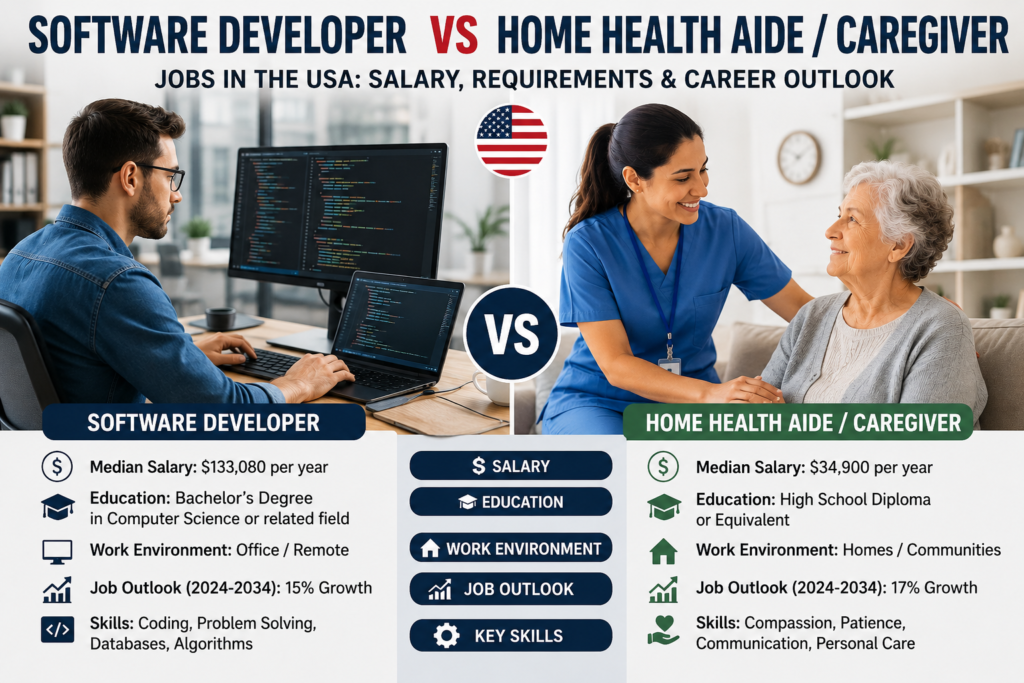
Data Scientist vs Software Developer
These careers have different primary objectives.
A software developer generally focuses on designing and building software applications.
A data scientist focuses on analyzing data, developing models, identifying patterns, and generating insights.
However, modern data teams can involve significant overlap between the two fields.
Someone interested in both areas may consider careers such as:
- Machine Learning Engineer
- Data Engineer
- AI Engineer
- Applied Scientist
- Software Engineer
Entry-Level Data Scientist Jobs
Searching for your first job can be challenging because many employers want previous experience.
Useful search terms include:
- Entry Level Data Scientist
- Junior Data Scientist
- Associate Data Scientist
- Data Science Intern
- Junior Machine Learning Analyst
- Data Analyst
- Business Intelligence Analyst
- Data Science Graduate Jobs
- Junior Data Analyst
- Machine Learning Intern
A data analyst or analytics position can sometimes provide useful experience before moving into a dedicated data scientist role.
Data Scientist Internship Opportunities
An internship can help students and recent graduates gain practical experience.
A good data science internship may provide exposure to:
- Real datasets
- SQL databases
- Python
- Data cleaning
- Machine learning
- Business problems
- Data visualization
- Team collaboration
When applying, do not focus only on the company name. Look at the actual responsibilities and learning opportunities.
Data Scientist Jobs for Fresh Graduates
Fresh graduates can improve their chances by creating a portfolio that demonstrates practical ability.
Consider building projects such as:
Customer Churn Prediction
Use historical customer data to predict which customers might stop using a service.
Sales Forecasting
Analyze historical sales and develop a model to estimate future demand.
Housing Price Analysis
Explore property data and identify factors associated with housing prices.
Customer Segmentation
Use clustering techniques to identify groups of customers with similar characteristics.
Sentiment Analysis
Analyze text data to identify positive, negative, or neutral sentiment.
The purpose of a portfolio is to demonstrate how you think and solve problems, not simply to show that you completed a course.
How to Build a Data Science Portfolio
A strong project should explain:
- What problem are you solving?
- Where did the data come from?
- How did you clean the data?
- What analysis did you perform?
- Which model did you use?
- How did you evaluate it?
- What did you learn?
- What limitations does the project have?
Include clear charts and explanations.
Avoid presenting a model as perfect. Explain its limitations honestly.
Remote Data Scientist Jobs
Some data science positions can be performed remotely because much of the work involves computers, data, software, and online collaboration.
However, remote availability varies by employer.
Search terms can include:
- Remote Data Scientist Jobs
- Work From Home Data Scientist
- Remote Junior Data Scientist
- Remote Data Analyst
- Remote Machine Learning Jobs
- Remote AI Jobs USA
Always check whether a position is genuinely remote or only offers hybrid work.
Industries That Hire Data Scientists
Data science is not limited to technology companies.
Potential industries include:
Technology
Companies use data to improve software, search, advertising, recommendations, and customer experiences.
Finance
Data scientists can work on forecasting, risk analysis, fraud detection, and customer analytics.
Healthcare
Data analysis can support research, operations, and other healthcare applications, subject to applicable privacy and regulatory requirements.
Retail
Retailers use data for customer analysis, inventory planning, pricing, and forecasting.
Manufacturing
Manufacturers can use analytics to improve production and identify operational problems.
Transportation
Data science can support routing, forecasting, logistics, and demand analysis.
Marketing
Companies use data to understand audiences and measure campaign performance.
Data Scientist Career Path
A potential career progression could be:
Data Analyst → Junior Data Scientist → Data Scientist → Senior Data Scientist → Lead Data Scientist
Other possible career directions include:
- Machine Learning Engineer
- Data Engineer
- AI Specialist
- Analytics Manager
- Data Science Manager
- Research Scientist
- Product Data Scientist
Career progression varies according to education, experience, technical ability, and employer.
Advantages of a Data Science Career
Strong Employment Outlook
BLS projects 33.5% employment growth from 2024 to 2034.
High Median Salary
The 2024 median annual wage was $112,590.
Technology-Focused Work
The profession combines programming, mathematics, statistics, and technology.
Many Industries
Data skills are useful in a wide range of sectors.
Potential for Career Growth
Experienced data professionals can move toward senior technical, management, machine-learning, or specialized roles.
Challenges of Becoming a Data Scientist
Despite the attractive salary and employment outlook, data science is not an easy career.
Potential challenges include:
- Significant learning requirements
- Strong competition for some positions
- Advanced mathematics and statistics
- Programming requirements
- Constantly changing technology
- Need for continuous learning
- Complex datasets
- Difficulty explaining technical results to nontechnical audiences
People considering this career should be prepared to keep learning throughout their professional lives.
How to Find Data Scientist Jobs in the USA
When searching online, use specific keywords instead of only searching for “data scientist.”
Useful Google Search Keywords
- Data Scientist Jobs USA
- Data Scientist Jobs Near Me
- Data Scientist Jobs in USA
- Entry Level Data Scientist Jobs
- Junior Data Scientist Jobs
- Data Science Jobs
- Data Scientist Jobs for Fresh Graduates
- Remote Data Scientist Jobs
- Data Science Internships
- Machine Learning Jobs USA
- AI Data Scientist Jobs
- Python Data Scientist Jobs
- SQL Data Scientist Jobs
- Data Analyst Jobs
- Junior Data Analyst Jobs
- Data Science Careers USA
Adding a location can make results more relevant.
For example:
“Data scientist jobs in California”
or
“Entry-level data scientist jobs in Texas.”
How to Apply for Data Scientist Jobs
Step 1: Create a Focused Resume
Include:
- Education
- Technical skills
- Programming languages
- Projects
- Work experience
- Internships
- Certifications
- Relevant achievements
Step 2: Build a Portfolio
Include two to five strong projects rather than dozens of unfinished projects.
Step 3: Customize Your Application
Match your resume to the skills mentioned in the job description—but only list skills you genuinely possess.
Step 4: Prepare for Technical Interviews
You may encounter questions involving:
- Python
- SQL
- Statistics
- Machine learning
- Probability
- Data interpretation
- Case studies
Step 5: Research the Employer
Understand what the organization does and how it uses data.
Common Data Scientist Interview Questions
What is the difference between supervised and unsupervised learning?
Be prepared to explain the concepts and give practical examples.
How would you handle missing data?
Discuss different approaches and explain why the appropriate method depends on the dataset and business problem.
What is overfitting?
Explain how a model can perform well on training data but poorly on unseen data.
How do you evaluate a machine-learning model?
The appropriate metric depends on the problem. Examples include accuracy, precision, recall, F1 score, mean absolute error, and others.
How would you explain a complex model to a nontechnical manager?
Focus on the business question, important findings, limitations, and practical implications rather than unnecessary technical terminology.
Is a Data Science Certification Worth It?
A certification can demonstrate that you have completed structured learning, but it should not be viewed as a substitute for practical ability.
For someone entering the field, a stronger combination can be:
Education + Technical Skills + Portfolio Projects + Practical Experience
Before paying for a certification, research:
- Curriculum
- Cost
- Recognition
- Practical projects
- Instructor quality
- Employer relevance
Avoid programs that promise guaranteed high-paying jobs.
Data Science and Artificial Intelligence
AI is increasingly connected to data science.
Data scientists may work with:
- Machine learning
- Predictive analytics
- Natural language processing
- Recommendation systems
- Computer vision
- Generative AI
- Statistical modeling
BLS reported in July 2026 that growing adoption of AI technologies is expected to support demand for data scientists and other technology-related occupations.
The most useful approach for aspiring data scientists is to learn fundamentals first and then build AI skills on top of them.
Frequently Asked Questions About Data Scientist Jobs
How much does a data scientist make in the USA?
The BLS reported a median annual wage of $112,590 in May 2024.
Is data science a high-paying career?
Yes. The 2024 median wage for data scientists was significantly above the median wage for all U.S. occupations, which was $49,500.
Is data science in demand?
Yes. BLS projects employment to grow by approximately 33.5% between 2024 and 2034.
Do data scientists need a degree?
A bachelor’s degree is the typical entry-level education listed by BLS. Some employers prefer or require advanced degrees.
What programming language should a beginner learn?
Python is a practical starting point because it is widely used for data analysis and machine learning. SQL is also highly valuable for working with databases.
Can data scientists work from home?
Some positions are remote or hybrid, but availability depends on the employer and job.
Can a data analyst become a data scientist?
Yes. Data analysis can provide useful experience, particularly when combined with additional programming, statistics, and machine-learning skills.
Is data science difficult to learn?
It can be challenging because it combines several areas, including mathematics, statistics, programming, and analytical thinking. Consistent practice and project-based learning can make the process more manageable.
Final Thoughts
Data Scientist Jobs in the USA offer a promising career option for people interested in data, programming, statistics, artificial intelligence, and problem-solving.
The latest BLS data reports a $112,590 median annual wage for data scientists in May 2024 and projects approximately 33.5% employment growth from 2024 to 2034.
The occupation typically requires a bachelor’s degree, while some employers prefer advanced degrees. Strong skills in mathematics, computers and information technology, and communication can be particularly valuable.
For someone starting from zero, the most practical strategy is to learn Python, SQL, statistics, data visualization, and machine learning, then demonstrate those skills through realistic projects.
Data science can be demanding, but the combination of strong projected employment growth, high median pay, and opportunities across many industries makes it a career worth researching carefully.